
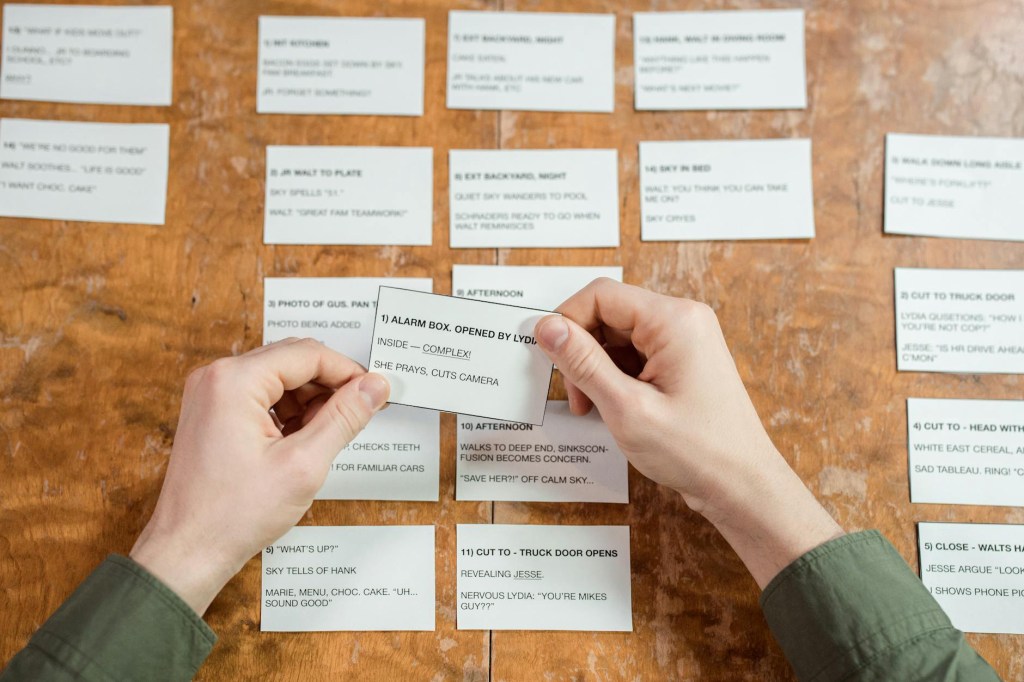
Card Sorting is an active learning strategy where students categorize a set of cards by identifying similarities and differences among them. This hands-on approach strengthens critical thinking, collaboration, and communication skills while promoting deeper understanding of a topic.
Materials:
- Index cards or other sturdy paper cut into equal sizes
- Markers or pens sort
- Timer (optional)
- Large sorting area (table, whiteboard, floor)
Procedure:
- Preparation (15 minutes):
- Concept Selection: Choose a topic or set of ideas you want students to explore.
- Card Creation: Write each concept or subtopic on a separate card. Aim for concise yet impactful wording.
- Sorting Categories: Determine initial sorting categories based on prior knowledge or desired learning outcomes. These can be adjusted by students during the activity.
- Introduction (5 minutes):
- Briefly explain the activity’s purpose and the chosen topic.
- Introduce the sorting categories and discuss potential variations.
- Individual Sorting (10 minutes):
- Distribute the cards among students or pairs.
- Ask them to silently sort the cards into piles based on their understanding of the categories.
- Encourage individual reflection and note-taking.
- Group Discussion (20 minutes):
- Students share their sorting rationale within their groups, justifying their placements.
- Facilitate respectful dialogue and encourage questioning and explanation.
- Groups may identify new categories or refine existing ones based on their discussions.
- Consolidation and Refinement (15 minutes):
- Groups present their final sorting arrangements to the entire class.
- Discuss commonalities and divergences, encouraging further explanation and justification.
- Revise the initial sorting categories as needed to reflect the collective understanding.
- Reflection and Application (10 minutes):
- Individually or in groups, students reflect on the sorting process and their learning gains.
- Prompt them to consider:
- What surprised them about the sorting process?
- How did their understanding of the topic change through the activity?
- How can they apply this new understanding in different contexts?
Differentiation:
- Varying Card Complexity: Use simpler cards for struggling learners and more complex cards for advanced learners.
- Multiple Sorting Rounds: Conduct multiple rounds of sorting with different categories each time.
- Visual Support: Provide graphic organizers or visual aids to support categorization.
- Kinesthetic Movement: Incorporate movement or gestures to represent different categories.
Technology Integration:
- Online Platforms: Utilize dedicated online Card Sorting platforms like OptimalSort, cardmake.io, or Sortly. These offer features like drag-and-drop sorting, data collection, and analysis tools, streamlining the process and minimizing paper waste.
- Digital Whiteboards: Tools like Miro or Mural can be used to create virtual Card Sorting boards. This allows for collaborative sorting sessions, real-time data visualization, and easy access to results.
- Presentation Software: Even basic tools like PowerPoint or Google Slides can be adapted for Card Sorting. Create slides with categories and cards representing information, and use features like speaker notes or comments for participants to explain their sorting choices.
 Teachers Get Active About Learning